How to Choose the Best Fabrics For Your Sportswear
Deciding the best fabrics and materials to use in your sportswear apparel can be a tricky decision to make, especially if you’re new to the business. Aside from the plethora of available materials on the market, it can be quite overwhelming deciding what percentage of polyester or lycra should be in your clothes.
Though with a little guidance, it doesn’t have to be a headscratcher anymore. We’re here to give you tips and advice so you can focus on the fun stuff, like how to design your fitnesswear!
If you’ve never started a sportswear business before, do check out our Eurofitness Resources center, where we provide you with educational tips and guides to help you on your journey.
We also manufacture all kinds of sports and fitness wear apparel so if you have a design you’d like to prototype or would like to produce for your brand, then do get in touch with us. Learn more about us in our brochure below:
Choose a Suitable Material for Sports and Fitness Apparel
Choosing the best fabrics for sportswear apparel can sometimes be as simple as choosing a SUITABLE one. For physical activewear, its imperative that your materials are suitable for high-energy activities, workouts and sports.
This means you’ll likely need materials that absorb sweat, remain flexible after many uses, are comfortable, breathable and materials that are easily washable. Some materials will perform better in certain conditions than others.
After considering the practical implications of your material, then you can start thinking about aesthetics – because aesthetics are important. The fabrics are an integral part of your design after all.
Take Inspiration From the Market
Sometimes, the design you want most is already out there in the market. There is an enormous amount of great designs out there, with materials used in the most practical and creative ways you can imagine. It’s truly a wealth of inspiration.

It makes sense that a lot of the big brands have fashion items that resemble each other – because that’s whats in demand and what customers ‘like’. If you want to create a sustainable sports clothing business, it’s very important you consider what customers are already wearing. This can also then help you decide what material to use in your apparel.
You can always tweak the material composition later if you’ve become familiar with the various fabrics. You can then start to think about knitted, woven and seamless fabrics as well as their compositions.
Choose From Available Materials
If you’re still unsure as to the best fabrics to select for your sportswear apparel, sometimes its best to just ask your manufacturer directly. More often than not, they’ll have a list of available materials you can choose from.
On top of that, available materials come at various prices. Some materials will be more expensive to use than others. Depending on how niche your product is and whether its a unique one, its important to consider prices as you will be competing with similar products in the market.
Materials that comprise seamless clothing are a lot more specialised and may only be available from specific factories in specific countries. So confirming what materials are available from your manufacturer is all the more relevant.
Take Eurofitness for example – we offer not only consultation on your materials but we offer a wide range of premium-grade materials that can really make your products striking. Contact us for information on the materials we use.
Common Materials Used in Sports and Activewear Apparel
Cotton
While cotton may not absorb moisture as well as other materials, it remains one of the most popular materials on the market. This is due to the fact that cotton doesn’t experience bad odors after a few uses. It’s also quite a breathable material that doesn’t irritate the skin which makes it a staple material for use in t-shirts, vests, trousers and socks.
Spandex
Spandex is possibly one of the most commonly used materials in the world for sportswear apparel. It is known for its stretchability – more than 100 times its size.

Spandex is lightweight and absorbs moisture very well. On top of that, it’s breathable and comfortable to train in. That makes it an all-around excellent choice for sportswear. The only draw-back with spandex though – is that it doesn’t support threads or embroidery very well.
That’s understandable as a stretchy fabric will conflict with a sturdy one. Nevertheless, spandex can be sublimated for customized patterns and designs.
Polyester
Considered one of the practical materials on the market, polyester is another excellent choice for sportswear clothing. Typically, it is used in combinations with cotton or lycra but essentially polyester provides a wrinkle-free, long lasting and breathable touch to clothing.

It’s tough, durable and one of the added benefits of polyester is it’s excellent insulating properties which can people warm in the cold. It’s not too expensive either!
Nylon
Lastly, nylon is another popular choice for use in sportswear clothing. It’s commonly used in jackets and for good reason. Nylon is stretchable, moisture absorbing and quite breathable.
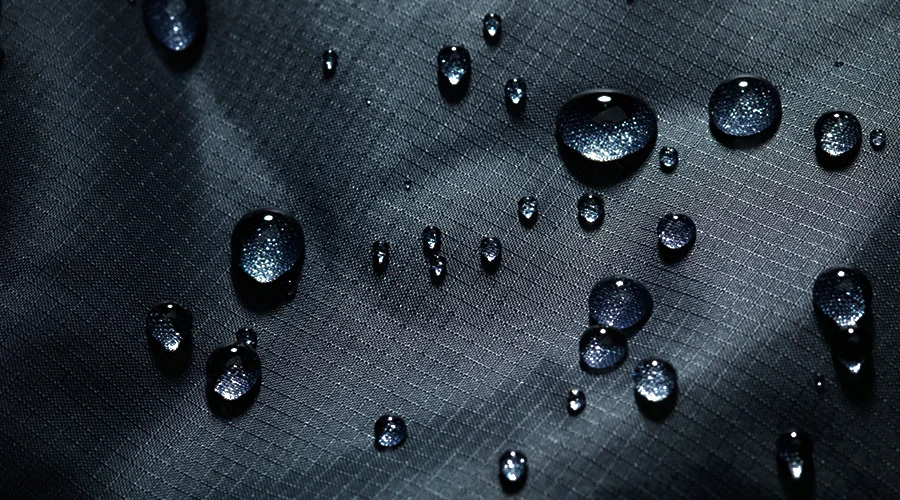
Nylon is commonly also used in sports jackets as it can be made water resilient and wind-resilient.
Synthetic
Synthetic fabrics are another popular choice of materials for the sportswear clothing industry. Fabrics like Fleece are made of synthetic fabric.
It’s common to find synthetic fabrics in hoodies, pullovers and running jackets. They’re sweat-wicking and lightweight as good as any other materials hence their popularity.
Choosing the Right Weight in Materials
If you’ve never dabbled in the clothing or fabrics industry before, you might not be aware that fabrics and materials often come denoted in ‘GSM‘. This stands for ‘grams per square meter‘
In simple terms, the gsm of a fabric is the measure of weight of a fabric. The higher the gsm, the more dense the fabric is. As a result, the weight of the fabric increases. Along with this, several other properties may change depending on how high or low the gsm is.
A higher gsm generally means your fabric will be warmer, tougher and less breathable. They’ll also likely be able to withstand more washes before losing their properties.
Sweat towels, sweatshirts and jackets might have higher gsm fabrics (180 – 350). While t-shirts, jerseys and leggings might have lower gsms (110 – 150)
So keep that in mind when you decide what your sportswear apparel is used for.
Get a Helping Hand
So that’s pretty much all you really need to get started on thinking about the best fabrics for your sportswear apparel. If you still have trouble identifying the right materials – then you should always ask someone for advice.
Your manufacturer will try to suggest the best possible choices and supply you with reference photos so that you can get a better picture.
We’re here to help you so simply reach out to us at info@eurofitnessapparel.eu or contact us through Whatsapp (contact below).